
The Memory Route
The Memory Route was a collective journey of forty final-year students, brought together by the WIRE project and their shared interest in exploring and researching the diverse life stories of women who resisted totalitarianism in Europe.
This interactive map gives you a glimpse of the activities and the dynamics that took place at each site.
At the heart of the Memory Route is education about democratic values and the aim to place the role of women -both as agents and as victims- at the centre of present-day historical narratives of anti-totalitarian resistance in Europe.
During the educational and research activities that took place in the partner’s counties, students engaged in dialogue with testimonies, historians and memory institutions and transformed their experiences in educational materials that you can find in the Wire Online Exhibition and use them in your own activities.
First stop: Greece
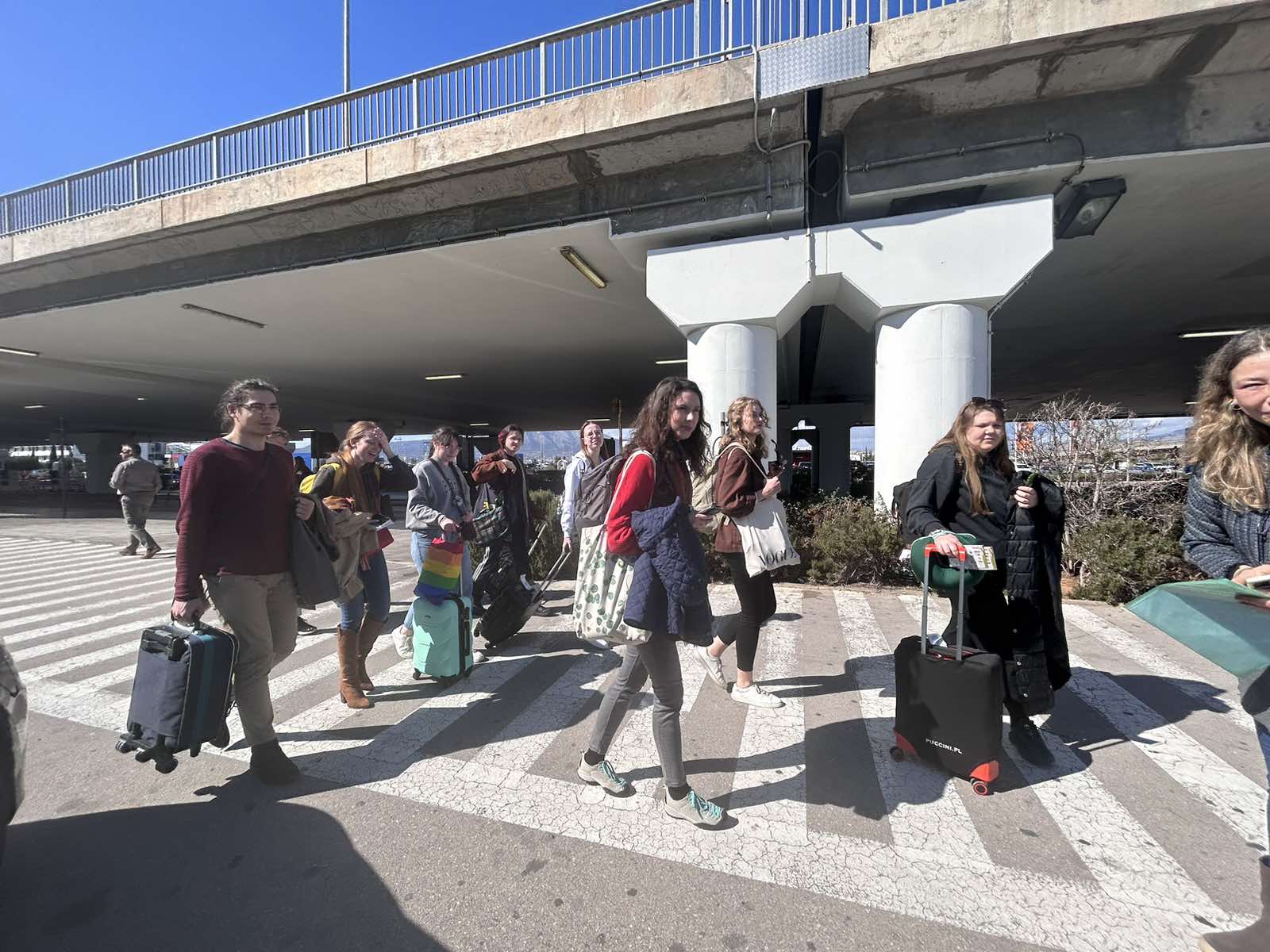
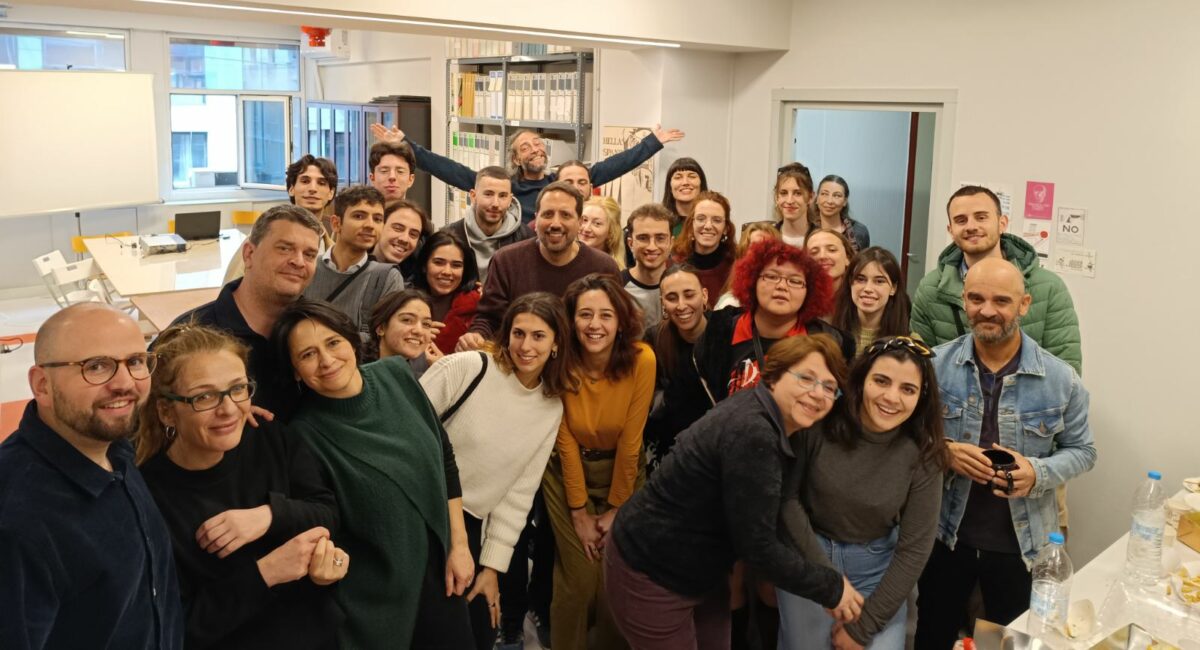
In February 2024, the WIRE team, coming from Italy, Spain, Poland, and various parts of Greece, arrived in Athens, the first stop on the Memory Route.
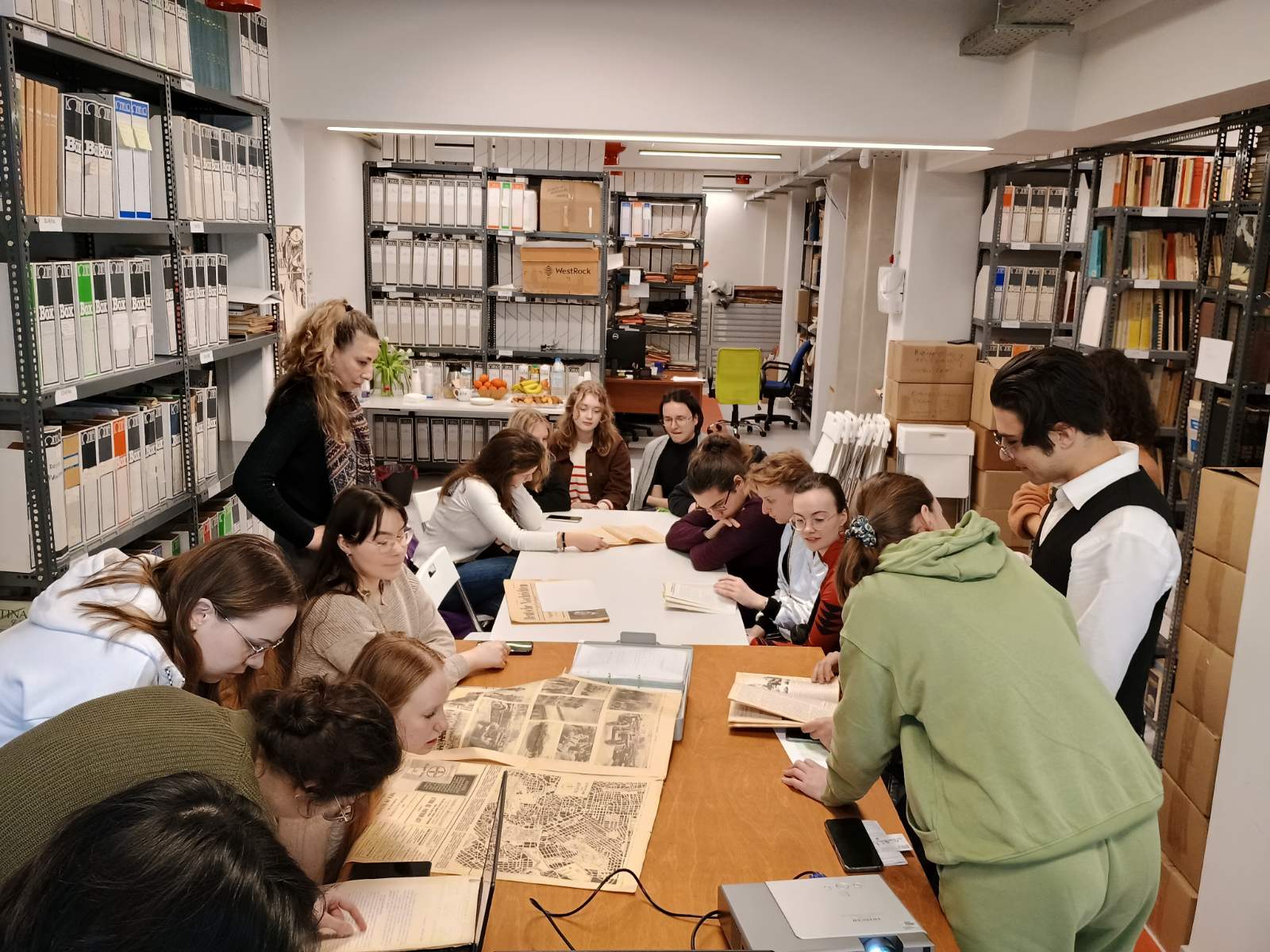
After six months of research and preparation, the time had come for the students to engage with the Contemporary Social History Archives (ASKI) archive and get a hands-on experience of the archival documents collection, which illuminates the women’s stories from a historical perspective.
Recording!
In the recording studio, students used their own voices to speak about the choices, sacrifices, determination and perseverance of women who found the meaning of struggle and solidarity in opposing authoritarianism. The scripts for these recordings were developed by the students themselves during a series of online meetings, with guidance from ASKI.
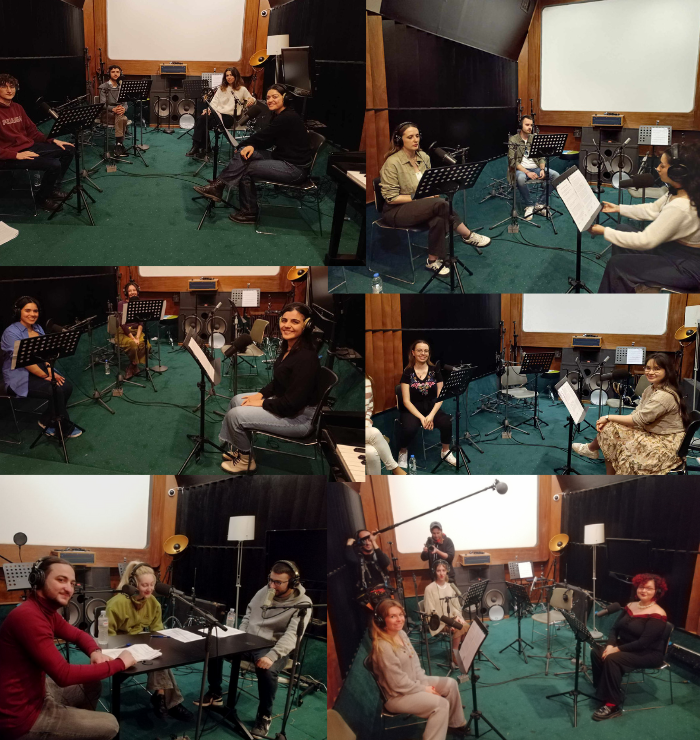
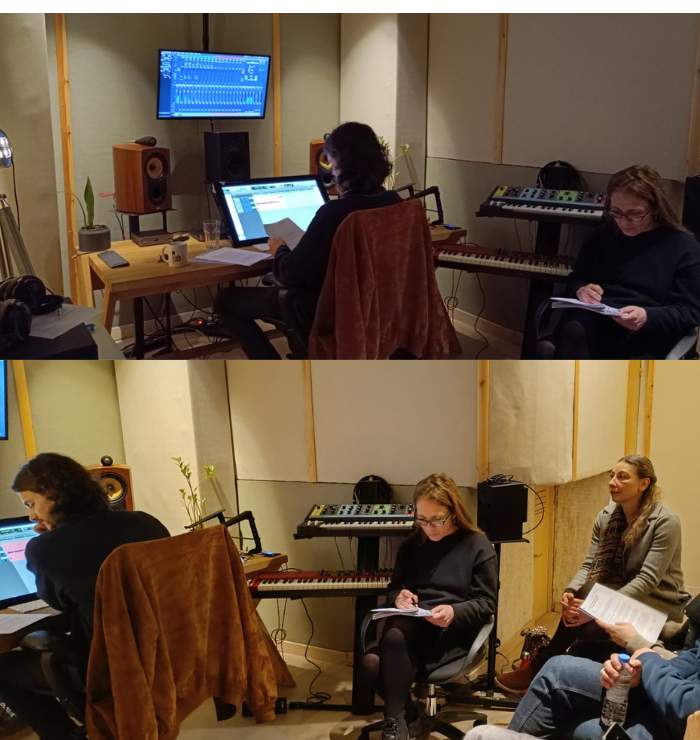
A total of twelve podcasts were recorded, each recounting the story of a woman active in resistance and anti-authoritarian movements in 20th-century Europe. The series features three stories from each of the participating countries—Spain, Italy, Poland, and Greece—and is based on biographies housed in WIRE’s Digital Repository.
Though the team said goodbye, it won’t be for long.
Second stop: Poland
Now the group is heading to Krakow, where will be hosted by Vila Decius.
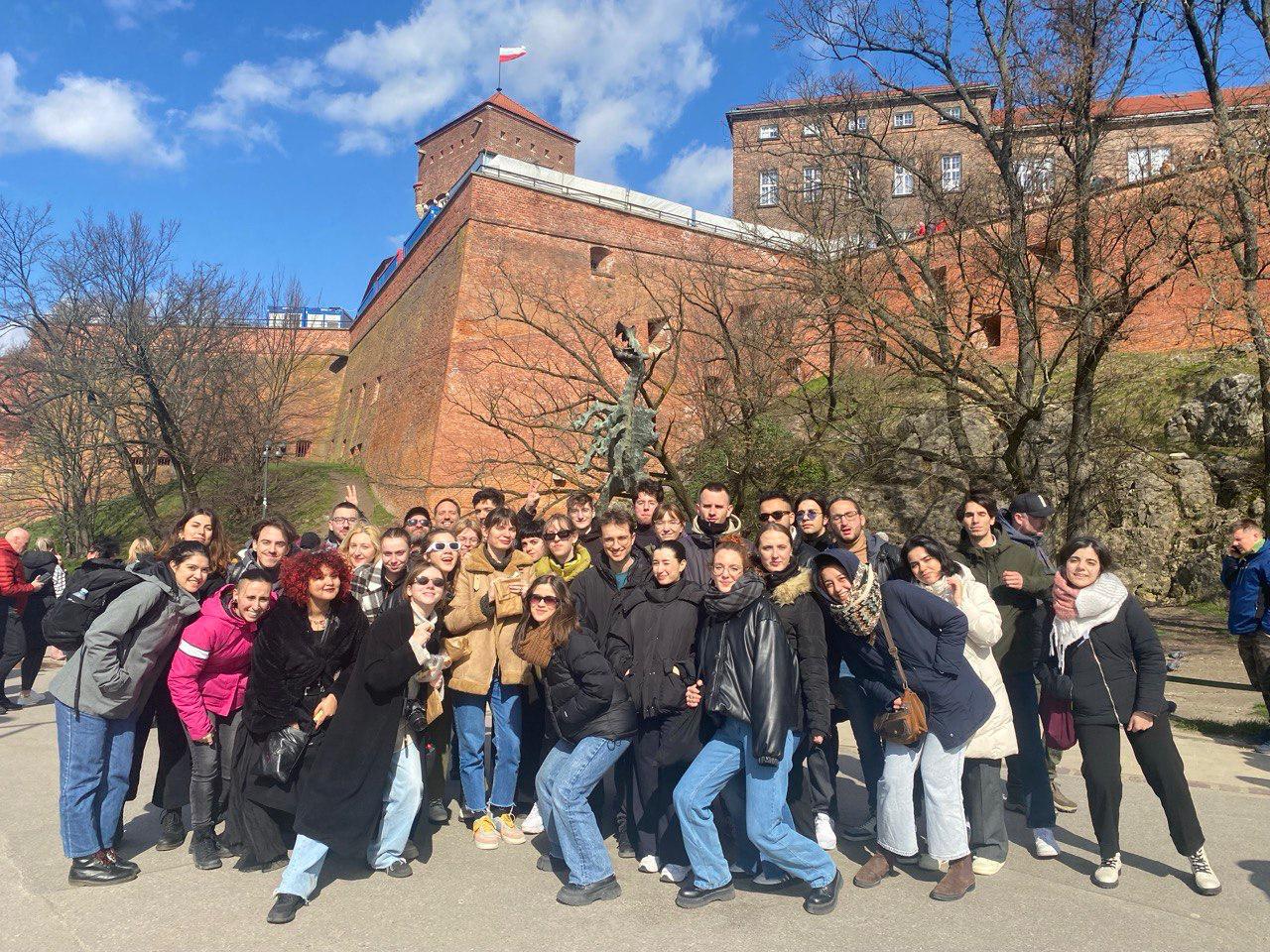
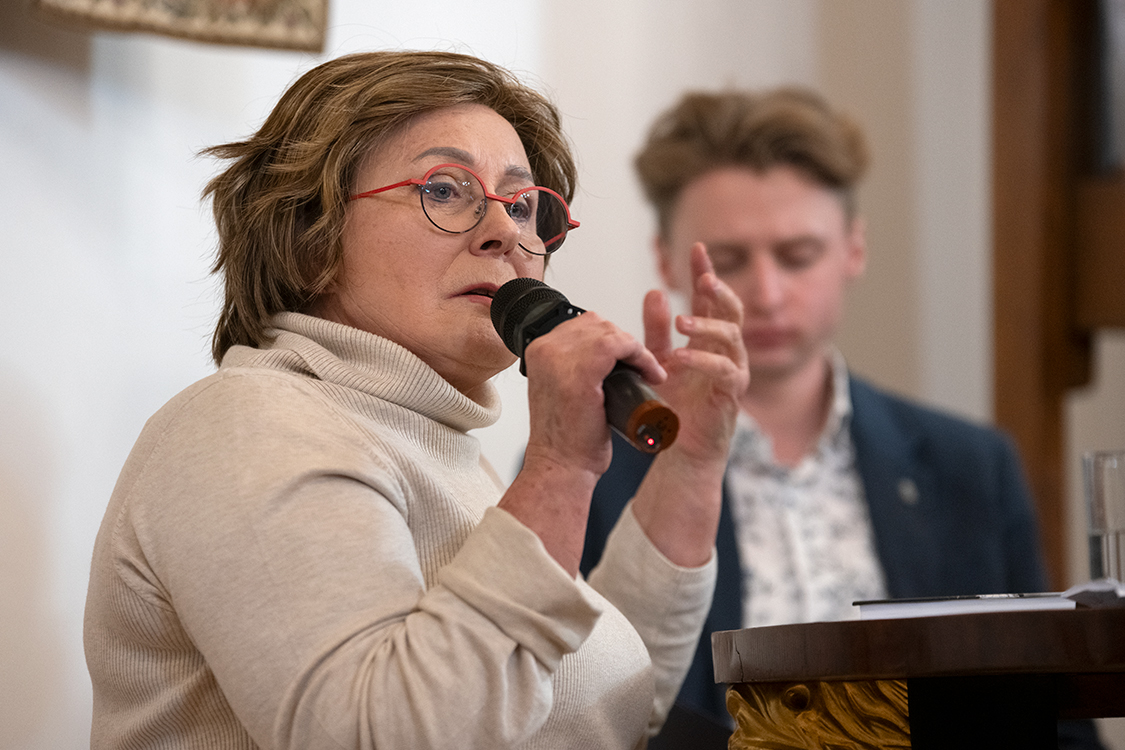
There, they meet with Liliana Batko-Sonik and students of the Institute of History of the Jagiellonian University. Liliana Batko-Sonik is a Polish philology (Jagiellonian University) alumna, anti-communist opposition activist, co-founder of SKS – Student Solidarity Committee (1972), and later also its spokeswoman.
Game script-writing
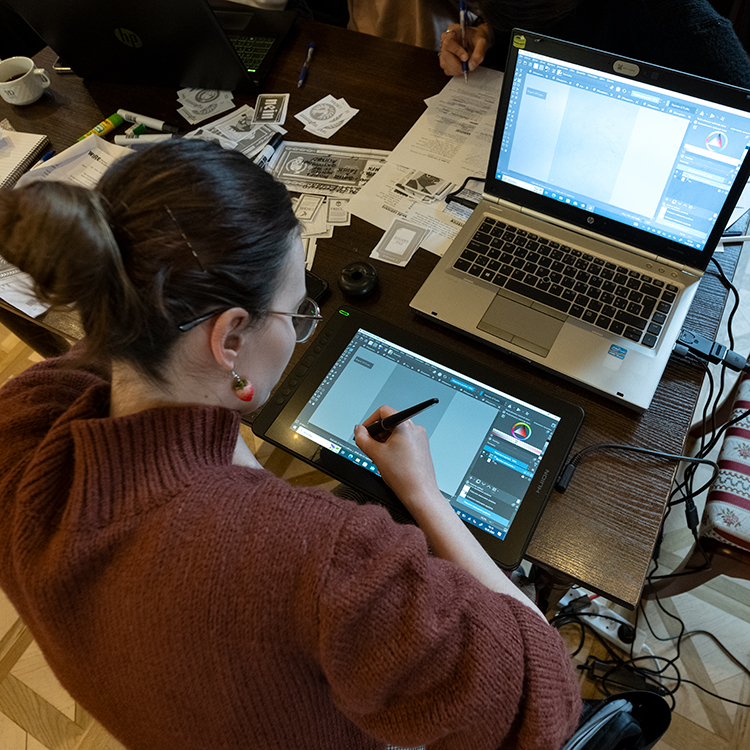
The game creation workshop focused on creating four narrative scenarios inspired by the lives of Polish women in resistance movements. These interactive stories are designed to serve as educational tools, offering a compelling way to engage with history and enhance historical learning.
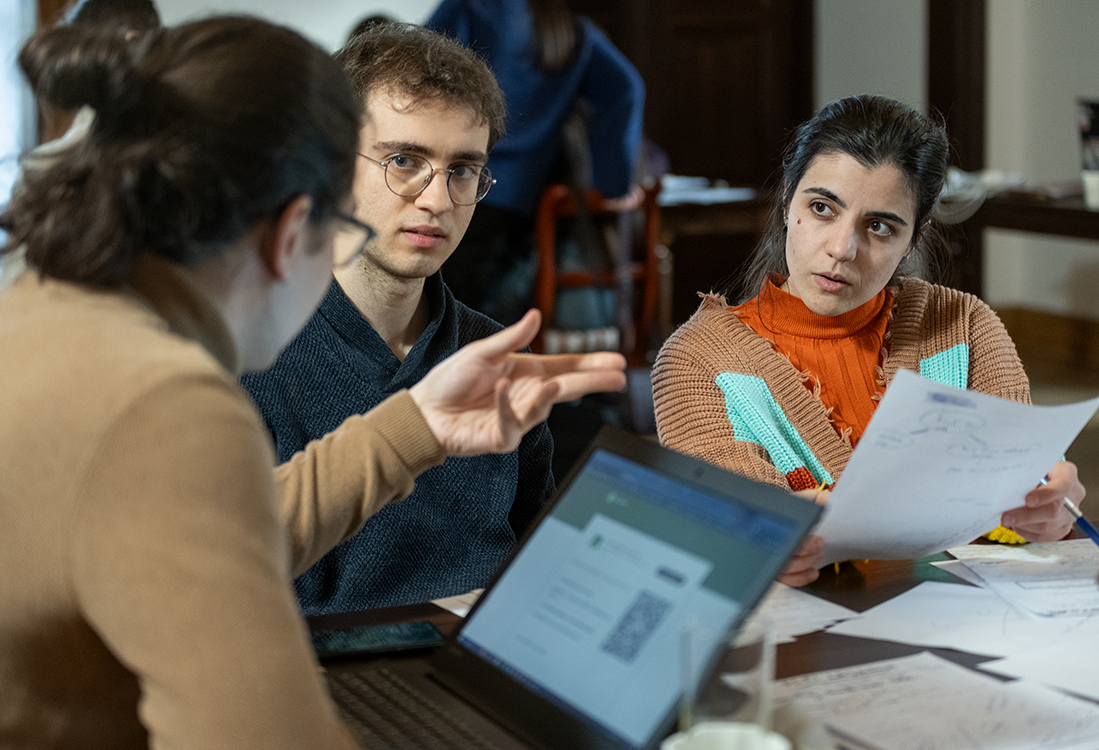
Bringing together games and the history of women in resistance?
Spyros, one of the students who participated in the workshops, reflected on this:
“I found the whole idea of mixing the lives of women in resistance with board or video games very interesting. I think it is important because it can introduce new people to their lives and deeds and make them learn some history that is less well-known. And they can do that by having a fun time so that’s always a plus.”
Third stop: Italy
Around April 25th (Italy Liberation Day), students experienced the memory path in Monte Sole Historical Park delving deeper into the Monte Sole Massacre history, identifying issues and critical themes in relation to WWII and its history in their countries.
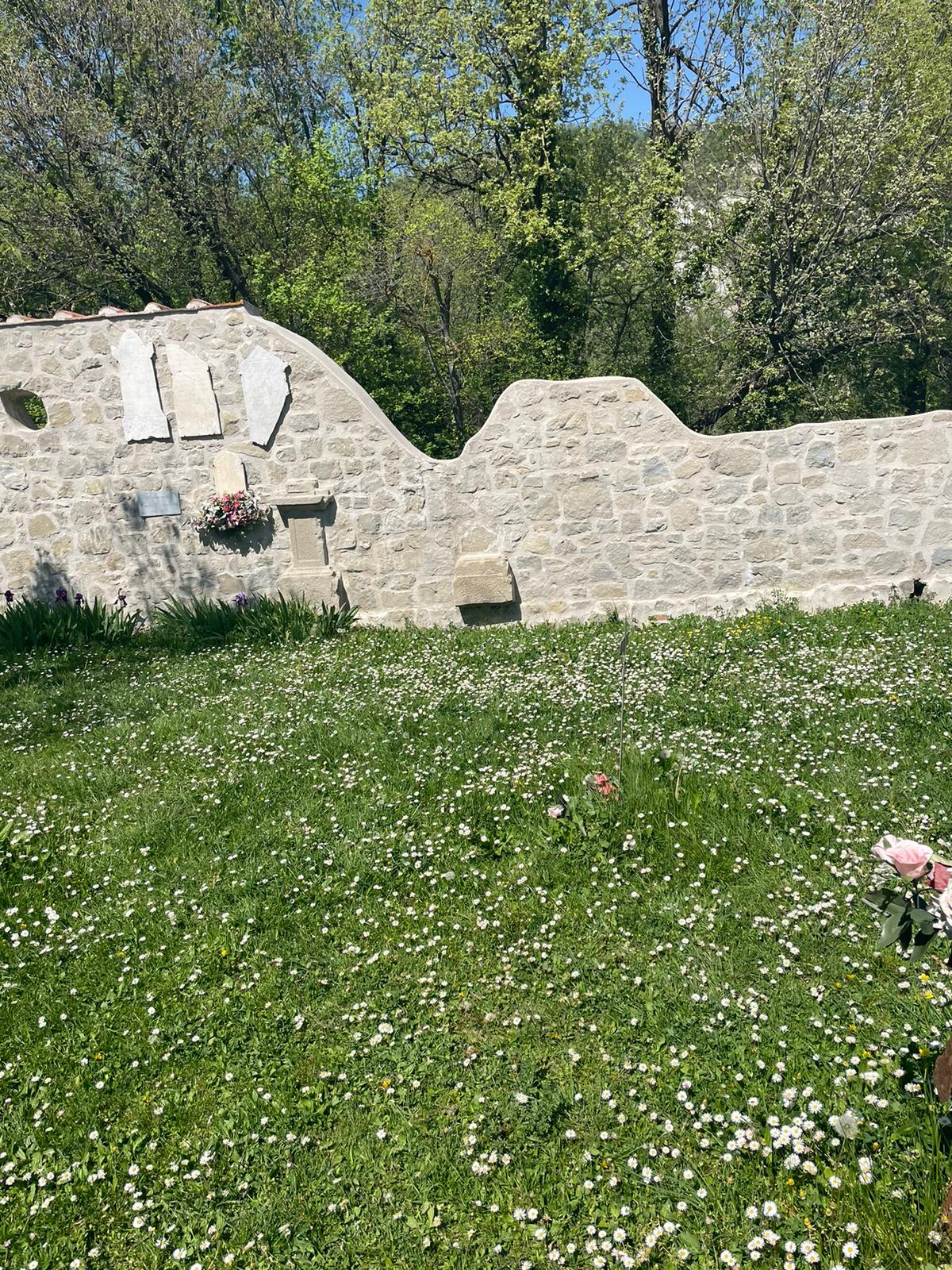
The school offered a horizontal environment where everyone had equal rights to express ideas and critically engage with the group in a respectful manner.
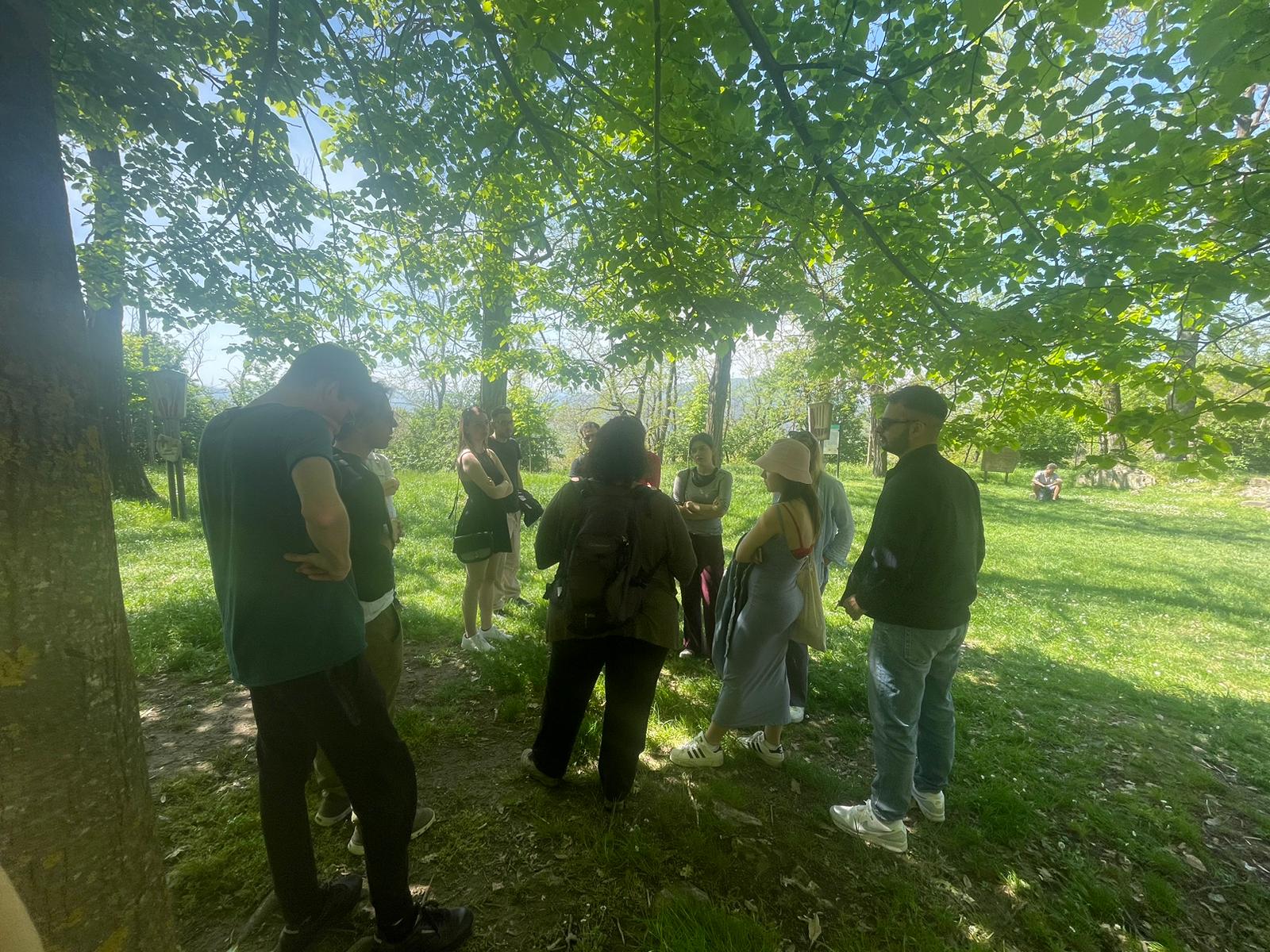
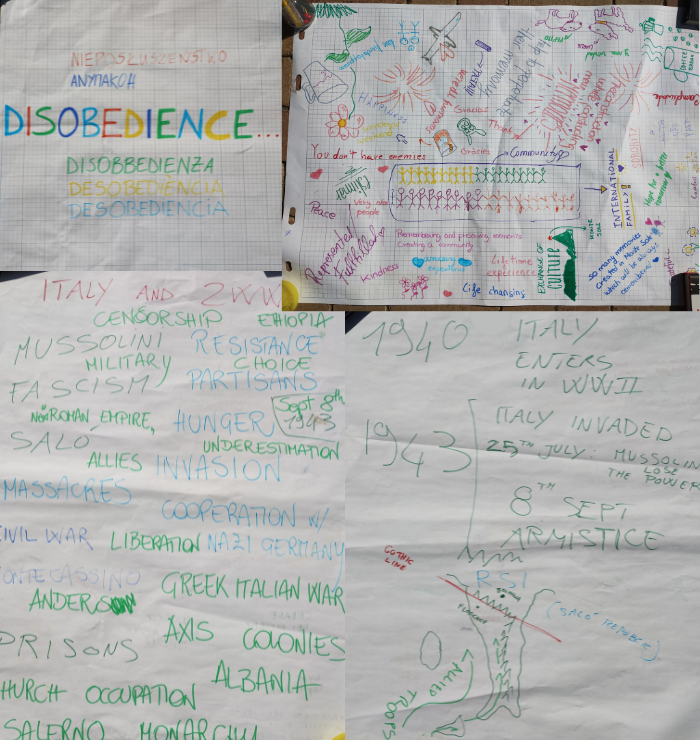
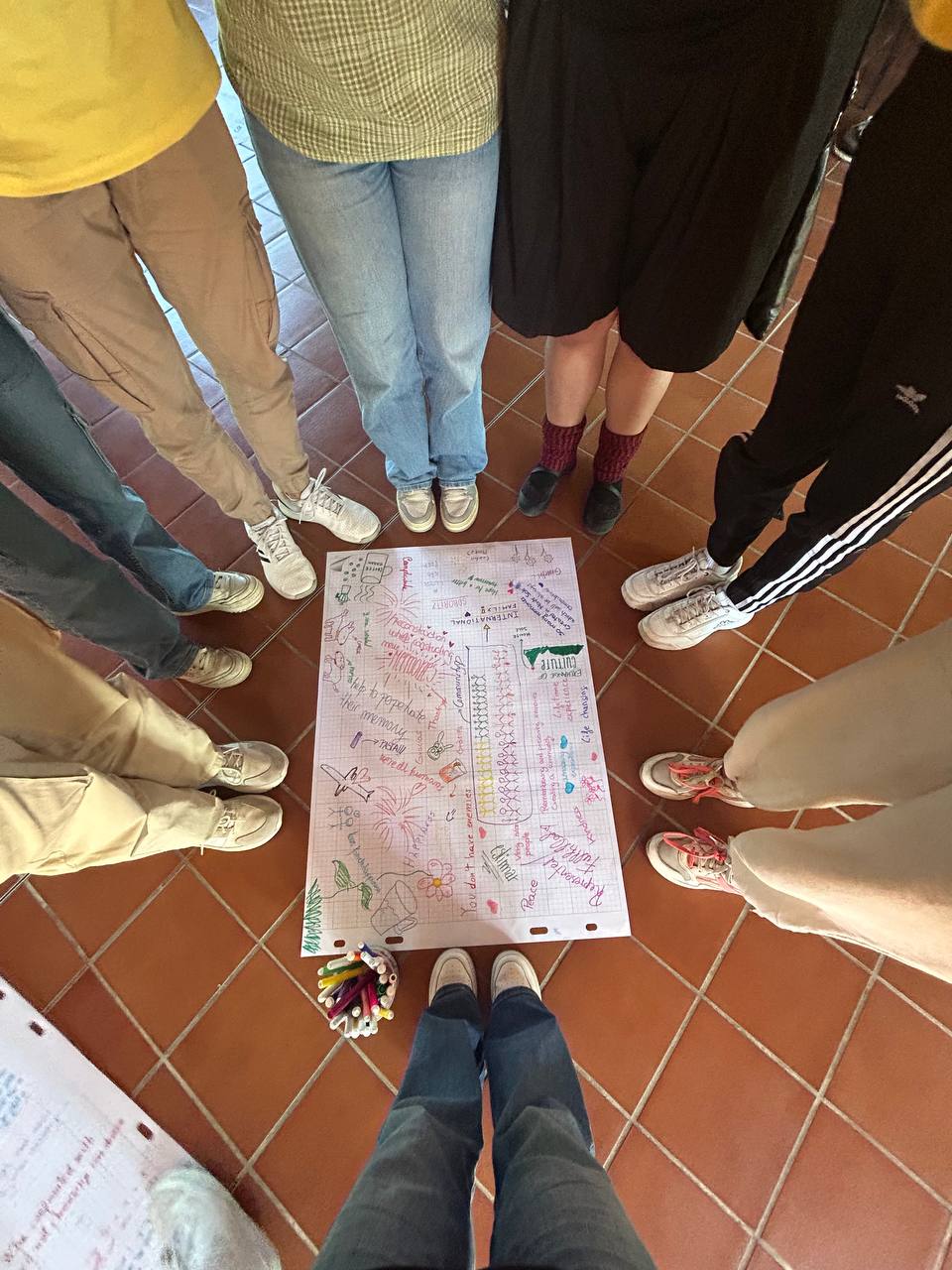
Memory Workshop
The encounter with the life stories of women that participated in the Italian Resistance (1943-1945) evidencing the diversity of their social and ideological backgrounds and the wide range of their involvement in the movement, sheltering partisans, organizing strikes, or participating in combat, and opening the path for a group reading of both the historical context and the life experiences of the women that lived. This gave to place a conversation about how much did the Resistance actually contribute to women’s freedom, projecting them beyond the traditional private dimension of the family into a political dimension, and which are the connections to the present.
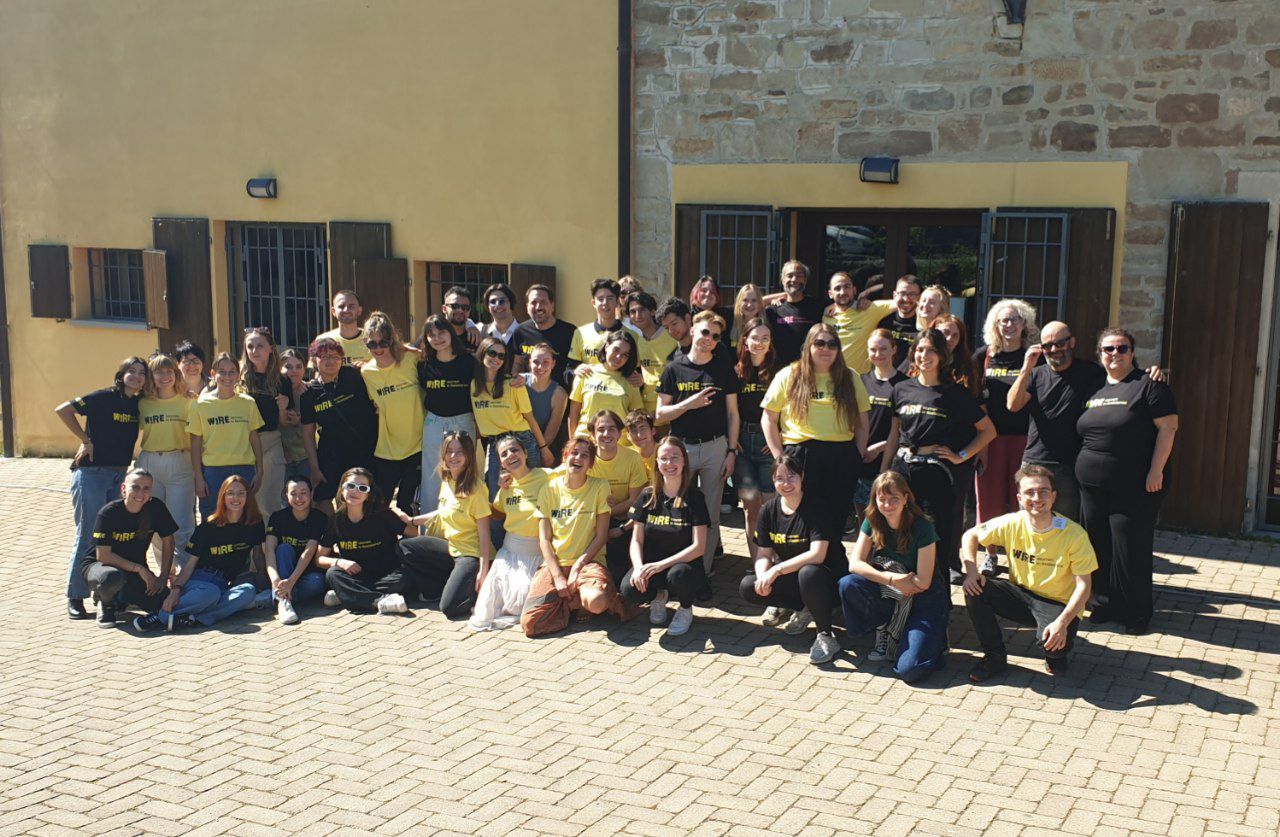
Having fun and creating a good atmosphere was also part of the programme!
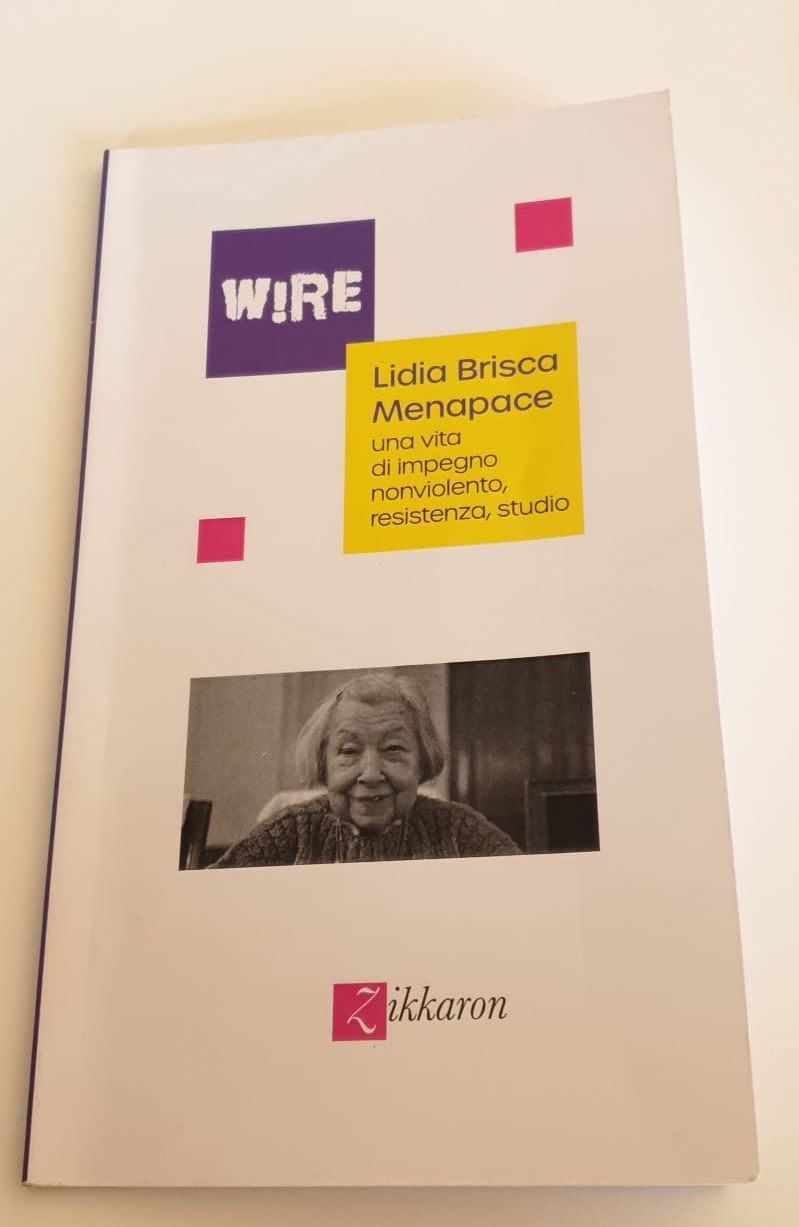
Fruits of this work are the collection of the 14 biographies, with an apparatus of notes and suggestions for an educational use, both for schools and citizens (Zikkaron publisher), a podcast with readings of 16 literature books related to women resistance and a self-standing and ready to set up physical exhibition.
Fourth stop: Spain
The final stop of the WIRE’s Memory Route!
The project welcomed the group to Barcelona, along with Memorial Democràtic and the Associació Catalana de Persones Expreses Polítiques del Franquisme (Catalan Association of Political Expressions of the Franco regime), which opened the debate on the political oppression of women during the Franco dictatorship.
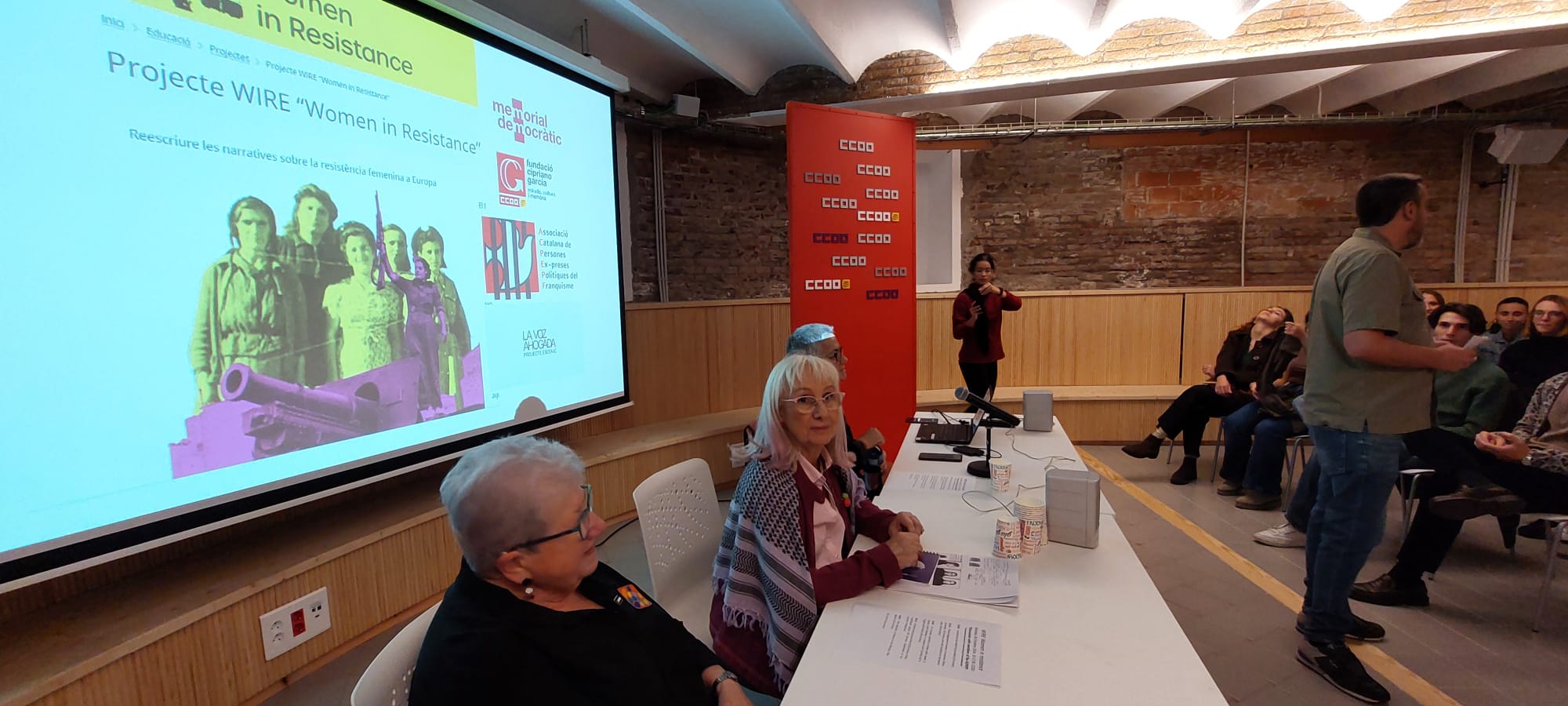
This final destination focuses on women’s resistance during the Spanish Civil War and in the post-war period, with visits to key memorial sites both in Barcelona and in the Exile Memorial Museum in La Jonquera.
Memory in the Walking
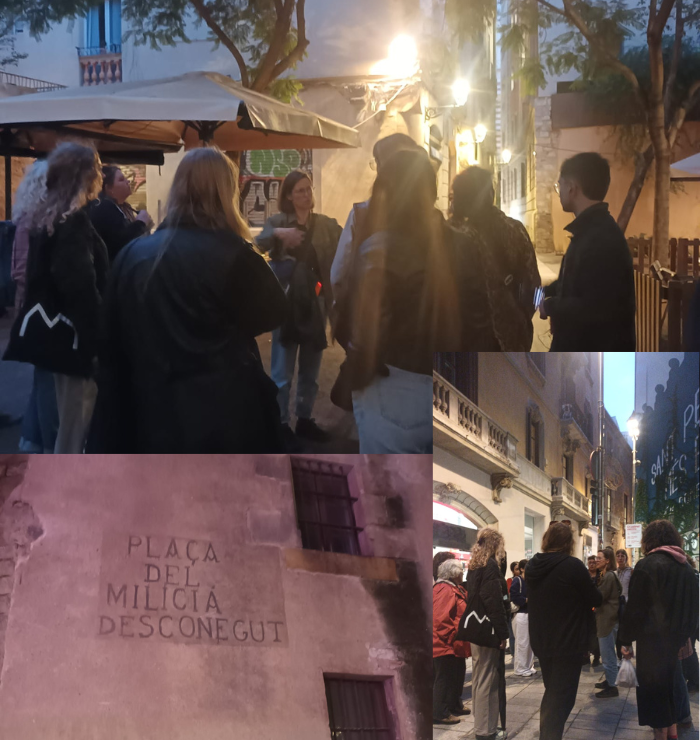
The Spanish Civil War historical walk in Barcelona covered topics such as anarchism, the International Brigades, bombing and the realities of daily life for women and children during the Spanish Civil War, visiting sites in the Gothic Quarter and La Rambla.
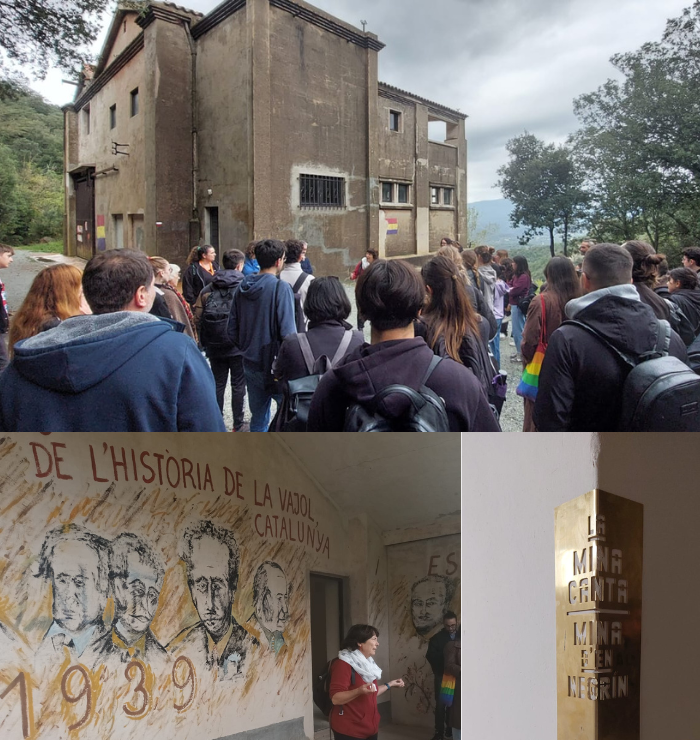
The walk continued to the Exile Memorial Museum, near the French border, approaching the path Republican soldiers and civilians took at the end of the Spanish Civil War in early 1939. This path, known as la Retirada (the withdrawal), saw nearly 500,000 people flee into exile. The life stories of the Spanish women in exile where at the centre of this visit.
The Memory Route concluded with an academic conference featuring experts on women’s antifascist resistance and gender history, a performance of the play Caure, and the release of the WIRE online exhibition. This final event synthesized current transnational studies on war, resistance, gender, and violence, underscoring the diversity of women’s resistance efforts and the persecution they faced.
The educational materials that were produced during the Memory Route, are made available online in the Wire Online Exhibition in order to inspire further reflection about gender and resistance movements, and hopefully open up new memory routes.